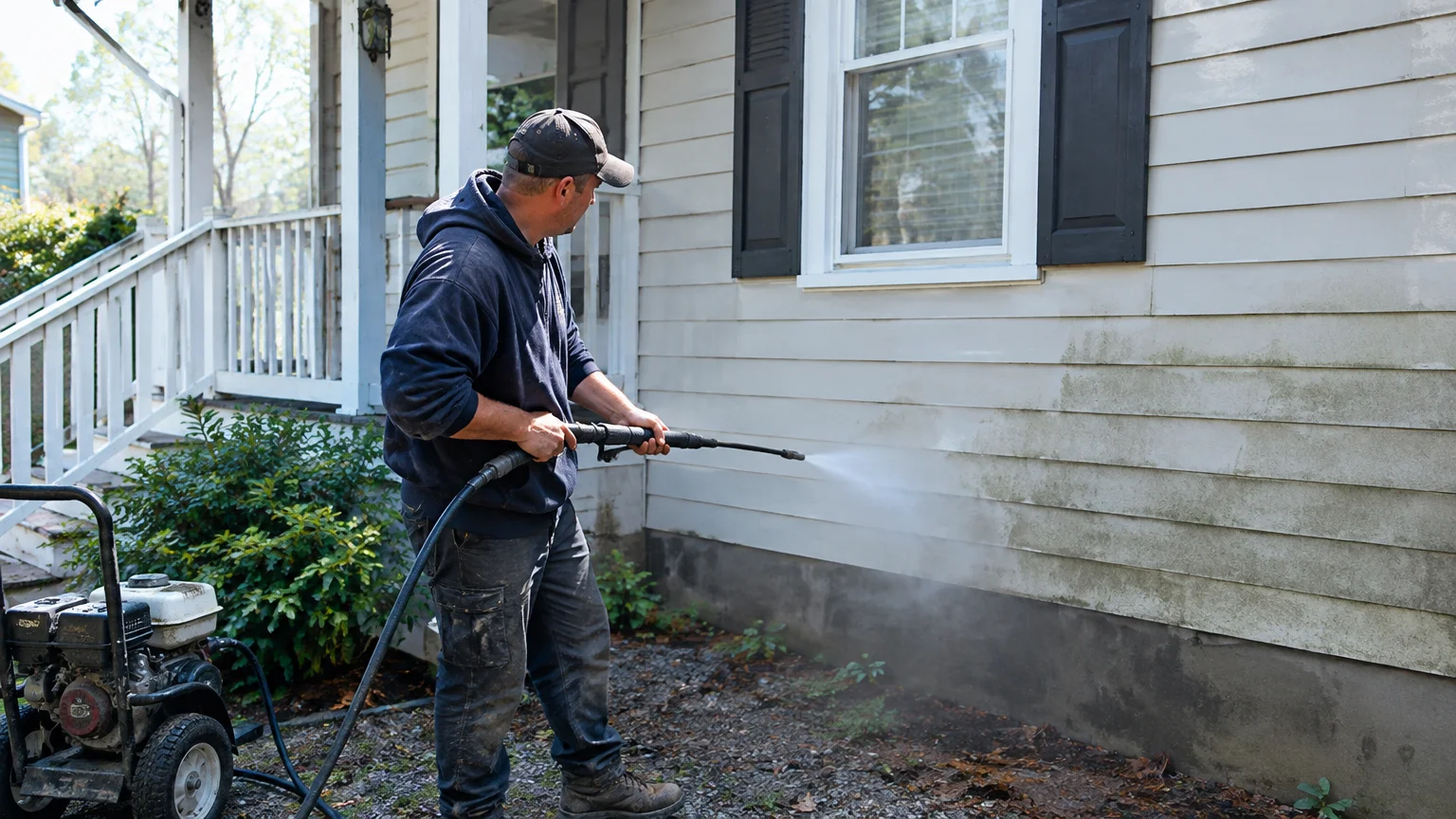
To remove oil stains from concrete driveway surfaces, start by soaking up fresh oil before it spreads. Older marks need a concrete-safe degreaser, light scrubbing, and careful rinsing. Pressure washing can help with deep stains, but the pressure, spray tip, and cleaning steps must match the concrete condition.
Table of Contents

- What Is the Difference Between Fresh and Set-In Oil Stains?
- How Should You Prepare a Concrete Driveway for Oil Stain Removal?
- How Do You Remove Fresh Oil Stains From Concrete?
- How Do You Remove Set-In Oil Stains From Concrete?
- What Pressure Washing Method Is Safest for Oil-Stained Concrete?
- When Should You Hire a Professional to Clean an Oil-Stained Driveway?
- How Can You Prevent New Oil Stains on a Concrete Driveway?
What Is the Difference Between Fresh and Set-In Oil Stains?
Fresh oil stays close to the top of the concrete. Set-in oil has had time to move into the small pores below the surface. This difference affects the best oil stain removal method and how many cleaning passes the driveway may need.
How stain age affects oil absorption
Fresh oil is easier to soak up because it has not spread far. A thick layer of clay absorbent, kitty litter, or an oil-dry product can pull much of it from the surface. Leave the material in place long enough to collect the oil. Then sweep it up with care.
Older oil can leave a dark, uneven mark. Heat, rain, car traffic, and time can push the oil deeper into the slab. Soap may clean the top while a dark shadow remains below. A degreaser helps break down the oil, while a poultice can draw some residue toward the surface.
A poultice is a thick paste made from cleaner and an absorbent powder. It sits on the stain as it dries. The powder helps pull oil from the concrete.
How to assess the stain before cleaning
First, check whether the concrete is smooth, painted, sealed, cracked, or worn. A dark spot may also contain tire rubber, rust, dirt, or algae. These materials need different cleaners. The wrong product may leave a pale patch or harm the finish.
Pressure Washing Richmond VA helps Richmond property owners choose a method that fits the stain and surface. Test a small hidden spot before treating the whole driveway. This can show whether the cleaner changes the concrete color and whether rinsing removes the oil.
How Should You Prepare a Concrete Driveway for Oil Stain Removal?
Good preparation makes oil removal safer and easier to control. Clear the driveway first, and let it dry when possible. Look for nearby drains, plants, walls, painted areas, and other surfaces that could be affected by the cleaner or dirty water.
What tools and cleaning supplies do you need?
A small fresh spill may need absorbent material, a stiff nylon brush, a dustpan, work gloves, and a bucket. Older stains may need a concrete-safe degreaser, a pump sprayer, a scrub brush, and a pressure washer with a suitable spray tip. A poultice needs an absorbent powder mixed with cleaner into a thick paste.
Do not mix cleaning products. Some cleaners can react when combined. Read each product label before use. Wear gloves and eye protection when the label says to do so. A cleaner made for concrete is safer than a harsh product picked without checking the surface.
How can you protect nearby surfaces and landscaping?
Move loose soil, leaves, toys, and outdoor furniture away from the work area. Plants can be covered with a breathable sheet for a short time. Do not leave them covered in hot weather. Keep dirty water away from storm drains, ponds, and garden beds.
Sweep the area before adding water. This keeps grit from turning into slurry and helps stop dirty water from spreading. Richmond homeowners can plan concrete cleaning when the weather allows the surface to dry and the rinse water to stay under control.
How Do You Remove Fresh Oil Stains From Concrete?
Treat fresh oil as soon as it is safe. The first goal is to absorb the spill. Do not begin by spraying it with water, since water can spread the oil across a larger area.
Which absorbent materials work best?
Clay absorbent, commercial oil-dry products, and clean cat litter can work on a fresh spill. Fine materials often touch more of the oil than large wood chips. Still, absorbent material cannot remove oil that has already soaked into the concrete.
Pour the material over the whole spill. Press it gently into place, but do not rub it outward. Leave it there for a suitable time. Then sweep it into a container. Check the concrete again and add more absorbent material if the surface still looks wet.
What cleaning steps should you follow after absorbing the spill?
Once the loose oil is gone, apply a small amount of concrete-safe degreaser. Work it with a stiff nylon brush and short strokes. Keep the strokes inside the stained area. Rinse with a controlled flow of water.
A homeowner can often manage a small, fresh spill with basic care. Keep the runoff away from storm drains and clean parts of the driveway. If a damaged vehicle caused the spill, repair the leak before cleaning the area again.
How Do You Remove Set-In Oil Stains From Concrete?
Set-in stains often need time and more than one treatment. A degreaser can loosen the oil. Scrubbing and careful rinsing then help move it from the concrete pores.
When should you use a degreaser or poultice?
A degreaser can help when the stain is spread out or only partly dark. Apply it to a small area. Let it sit for the time shown on the label. Keep the cleaner wet during that time, but do not let it dry into a film.
A poultice may help with a darker, older spot. Spread the paste over the stain and allow it to dry. Remove the dry material as directed. Deep oil may need more than one round because it does not always leave the slab at once.
How does pressure washing help lift embedded oil?
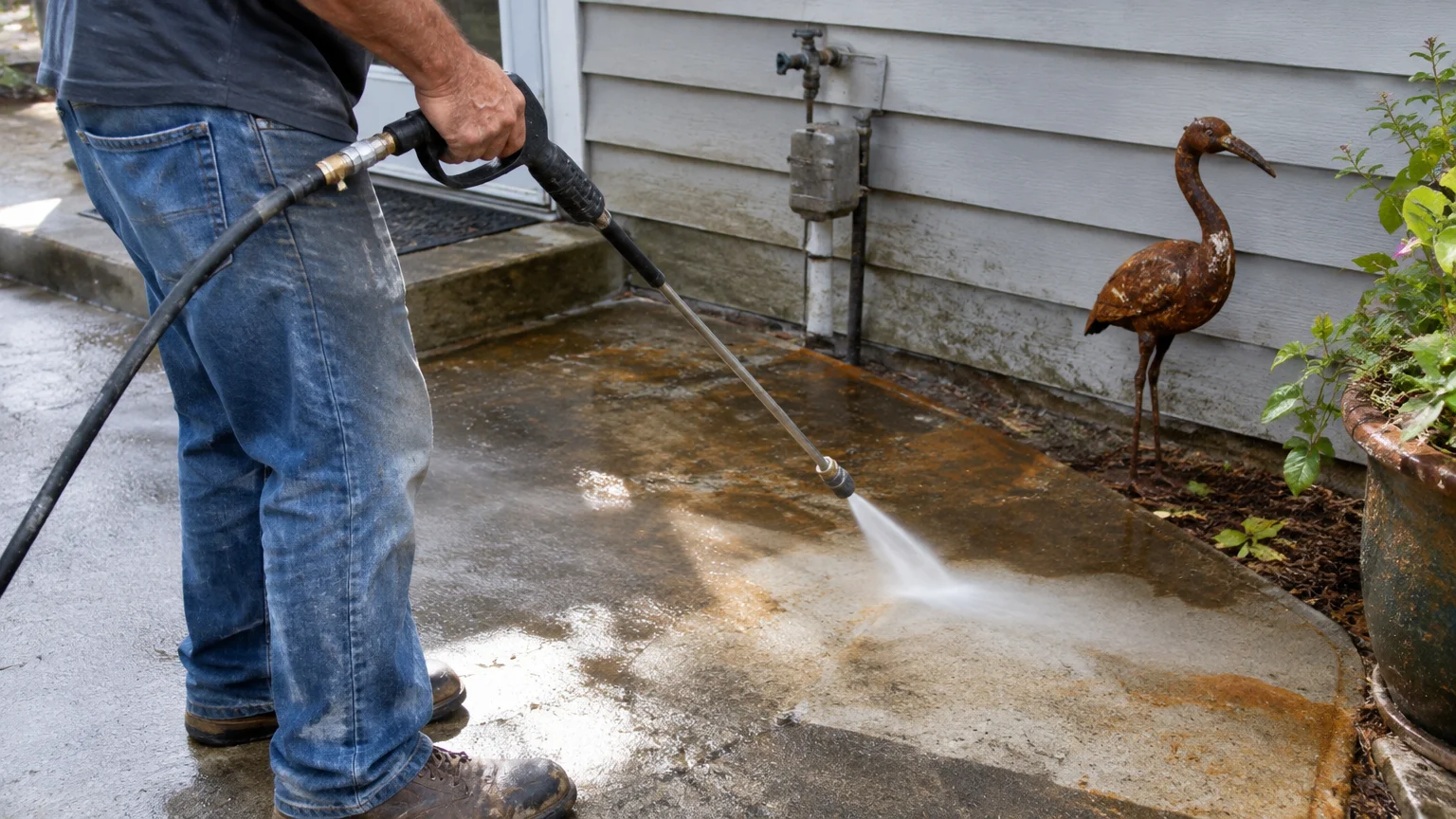
Pressure washing can remove loosened oil, dirt, and cleaner residue. It works best after a degreaser has broken down the stain. Keep the wand moving. Start with a wide spray pattern in a hidden area.
Pressure alone may not remove deep oil. It may also push dirty water onto clean concrete if the work has no plan. For large driveways, parking areas, or stains that return, professional Concrete Cleaning Services may give better control.
What Pressure Washing Method Is Safest for Oil-Stained Concrete?
The safest method uses the least pressure that cleans the surface well. Water flow, spray distance, cleaner choice, and concrete age all matter. Maximum pressure is not always the best choice.
How much pressure and water flow should be used?
There is no single pressure setting for every driveway. Older concrete, weak joints, decorative finishes, and damaged slabs need a gentler method. A wide fan tip, steady movement, and a test patch can lower the risk of etching.
Do not hold the wand close to one spot. Use a slow, even pattern instead of quick passes in random directions. A surface cleaner may help on broad, sound areas. Test it first before using it across the full driveway.
Which mistakes can damage concrete or spread the stain?
Common mistakes include using a narrow tip too close to the surface, letting cleaner dry, skipping a test patch, and rinsing dirty water over clean areas. Damage may appear as rough lines, bright marks, loose grit, or exposed stone.
Oil and water can move toward a garage, sidewalk, or street. Work from the cleanest edge toward the dirtiest area. Manage runoff as you go. Pressure washing is not the same as soft washing. Soft washing uses lower pressure and cleaning solution for delicate surfaces, while concrete often needs controlled mechanical cleaning.
When Should You Hire a Professional to Clean an Oil-Stained Driveway?
A homeowner does not always need professional help. Small fresh spills can often be handled at home with absorbent material, sweeping, and careful spot cleaning. Work slowly and stop if the surface reacts badly.
Which stains and surface conditions need specialized treatment?
Professional help is useful when a stain is large, old, spreading, or close to a storm drain. It is also wise when the driveway is cracked, painted, sealed, decorative, or worn. A trained cleaner can test the product and change the method before treating the whole area.
Businesses, landlords, HOAs, and property managers may need help when several areas must look alike. Driveways, sidewalks, patios, and parking spaces may each need a different method. Pressure Washing Richmond VA serves Richmond properties and can assess whether stain removal is practical.
What should property owners expect from a professional cleaning process?
A careful process starts with a surface review and stain check. The cleaner may protect nearby areas, apply a suitable treatment, scrub the stain, use controlled pressure, and manage wastewater. Deep marks may improve greatly without fully disappearing.
The result depends on the stain, concrete age, weather, old sealers, and how long the oil has been in the slab. Ask what method will be used and whether the team will test a small area first. The final cost is confirmed on a quote and depends on surface size, access, stain severity, and treatment needs.
How Can You Prevent New Oil Stains on a Concrete Driveway?
Prevention starts with finding leaks early. Clean small spills before they spread. Simple habits can protect the driveway and reduce the need for strong cleaning later.
What maintenance habits help prevent recurring spills?
Check vehicles for leaks, especially after repairs or long periods of parking. A drip pan can protect the concrete beneath a vehicle that needs service. Cover fresh spills with absorbent material instead of washing them toward the street.
Sweep the driveway often and check it after storms. Leaves and dirt can hide small oil spots until they grow. Sidewalk Cleaning and Patio Cleaning Services can also help keep nearby hard surfaces clear of grime and slippery buildup.
Should you seal a concrete driveway after stain removal?
Concrete sealing may slow how quickly oil enters the surface, but it does not make concrete stain-proof. The slab must be clean and fully dry before sealing. The right sealer depends on the concrete finish, weather exposure, and planned use.
Sealer may change the surface color or make future repairs easier to see. Check the product label and test a small area when possible. Good parking habits, fast spill cleanup, and regular driveway cleaning still matter after sealing.
Key takeaways
- Absorb fresh oil before using water.
- Older stains may need degreaser, scrubbing, or a poultice.
- Safe pressure washing uses steady movement and controlled pressure.
- Homeowners can often clean small, fresh spills themselves.
- Deep, large, or spreading stains may need professional treatment.
Frequently Asked Questions
Can dish soap remove oil from a concrete driveway?
Dish soap may help with a small, fresh mark, but it may not remove deep oil. A concrete-safe degreaser usually works better for set-in stains. Test the cleaner first and rinse with care. Do not push dirty water into storm drains, garden beds, or clean parts of the driveway.
Will pressure washing remove every oil stain?
Pressure washing can remove loose oil, dirt, and cleaner residue. It may not erase oil that has soaked deeply into concrete. Pre-treatment often matters more than pressure alone. Older stains may improve without disappearing, especially when the slab is porous, cracked, or already discolored.
What cleaner should be used on an oil-stained driveway?
A cleaner labeled for concrete and oil or grease is a useful starting point. Match the product to the surface and follow the label. Stronger is not always better. A harsh cleaner can harm coatings, nearby plants, or the concrete finish.
Can a homeowner clean a large oil spill?
A homeowner may handle a small spill with absorbent material and careful spot cleaning. A large spill is harder because runoff can spread quickly and reach drains. Professional help is safer when the spill is extensive, the concrete is damaged, or the leak source remains unfixed.
Should concrete be sealed after oil stain removal?
Sealing may slow future oil absorption, but it cannot stop every stain. The concrete must be clean, dry, and suited to the product. A test patch can show how the sealer changes the color. Regular checks and quick spill cleanup still matter after sealing.
Conclusion
The best way to remove oil stains from concrete driveway surfaces depends on stain age, depth, and concrete condition. Fresh spills need quick absorption. Set-in marks need controlled treatment and patience. Pressure washing works best as part of a careful plan, not as a replacement for preparation.
For difficult stains or large properties, Contact us to discuss concrete cleaning options. Pressure Washing Richmond VA helps property owners make a practical plan for cleaner and safer outdoor surfaces.
If you are not sure what you are dealing with, it is worth having someone look at it before it turns into a bigger job. Get in touch with Pressure Washing Richmond VA today and we will tell you where you stand.